Understand your spending, protect your peace.

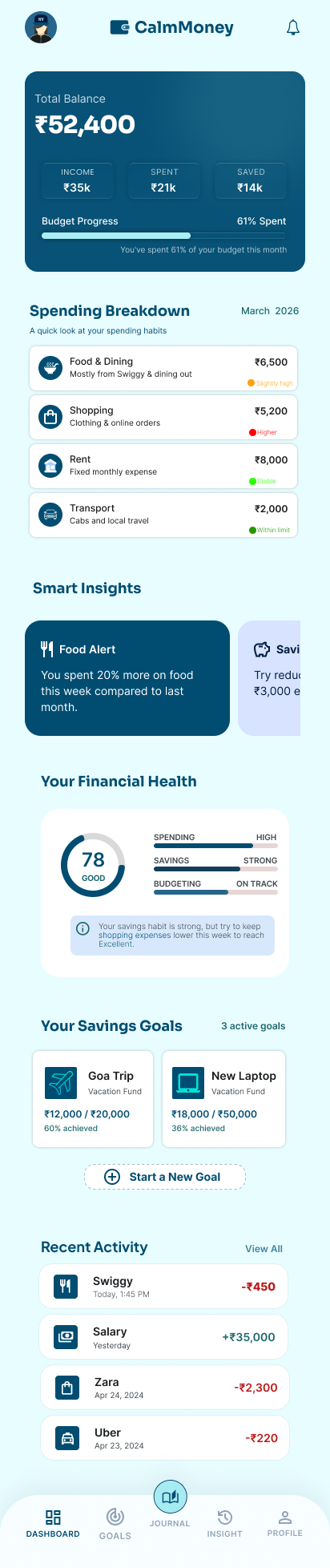

Managing money is more than checking a balance.
Unclear Spending Habits
Transaction lists can show where money goes, but understanding spending patterns and identifying unnecessary expenses can be difficult.
Difficult-to-Track Savings
Without visible progress and clear milestones, staying motivated to save consistently can be challenging.
Limited Financial Reflection
Spending insights are more useful when people can understand the reasons behind their decisions and turn that awareness into practical actions.
Balancing financial awareness with peace of mind.
Spending lists lack emotional context
Raw numbers and transaction histories create stress without explaining what triggered the purchase.
Introduce the Money Journal, allowing users to reflect on daily spending habits and recognize emotional triggers.
Saving motivation fades over time
Without ongoing visual encouragement, users lose track of savings milestones and shared targets.
Design goal progress cards with clear milestone indicators, percentage completion, and direct contribution actions.
Data overload in personal finance
Displaying too many complex charts simultaneously overwhelms users trying to make quick decisions.
Condense metrics into a clean balance summary complemented by digestible, single-focus Smart Insights.
Turning reflection into actionable steps
Reviewing previous expenses is ineffective if users do not know how to adjust next week's budget.
Surface forward-looking recommendations such as dining budget targets and scheduled expense limits.
From financial complexity to everyday clarity.
Understand
Identify the main financial tasks the app needs to support: checking balances, reviewing spending, managing savings goals, understanding financial patterns, and reflecting on decisions.
Structure
Organize these tasks into five connected screens: Dashboard, Goals, Insights, Profile, and Money Journal. Establish clear information hierarchy so users can find important financial information easily.
Design
Create the visual interface using clear headings, prominent financial amounts, progress indicators, organized cards, and actionable suggestions. Maintain consistent styling across all five screens.
Typography
Aa
Clean sans-serif typographyUse bold or semibold text for page headings, account balances, savings targets, and important financial figures to make key information easier to notice. Use regular-weight text for descriptions and supporting information to keep the screens readable without competing with the important numbers.
Colors

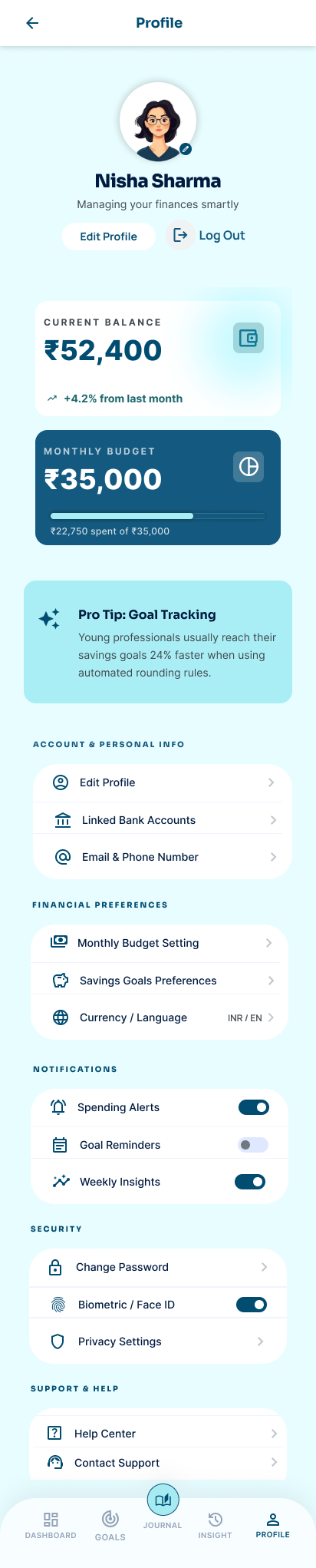
Making financial awareness feel approachable.
CalmMoney brings spending insights, savings goals, financial preferences, and personal reflection into one connected experience. The concept aims to help users move beyond simply checking their balances and make more informed, intentional financial decisions.